
Hi, I'm Donald R.. I live in San Antonio. Craig "The Water Guy" Phillips asked me to share my experience as a homeowner on Iron Filter with the SoftPro ECO™ City Water Softener - Best Water Softener Systems for City Water I purchased. This is how my adventures played out. I hope this helps you in your decision.
Did you know that hard water affects over 85% of American homes, causing thousands of dollars in appliance damage and driving up household expenses?
I discovered this the hard way when my dishwasher started leaving white spots on everything and my morning coffee began tasting like I was brewing it with chalk water.
Living in San Antonio, I thought city water would be different from well water problems I'd heard about. Boy, was I wrong. The mineral-heavy water flowing through our municipal system was wreaking havoc on my home, and I didn't even realize it until the damage was already mounting.
After six months of research, installation struggles, and real-world testing, I'm sharing my complete experience with the SoftPro ECO water softener. This isn't a quick Amazon review – it's the full story of what worked, what frustrated me, and whether this system actually solved my hard water nightmare.
The Hard Water Reality That Forced My Hand
My water problems started subtly, then snowballed into a household crisis I couldn't ignore any longer.
Every morning, I'd find new white crusty deposits on my faucets and showerheads. My wife complained constantly about her hair feeling "sticky" after washing, and our skin felt tight and itchy after every shower. I initially blamed it on seasonal changes or maybe we needed different soap.
Then the real damage became obvious. Our five-year-old dishwasher started leaving chalky residue on glasses that wouldn't come off, even with multiple wash cycles. The heating element in our water heater began making strange popping sounds – a clear sign of mineral buildup according to our plumber. Most frustrating was watching our expensive espresso machine slow to a crawl as calcium deposits clogged the internal components.
I tested our water with a simple TDS meter and discovered we had 18 grains per gallon of hardness – well into the "very hard" category according to the Water Quality Association standards. San Antonio's Edwards Aquifer water, while safe to drink, carries significant dissolved limestone that creates these ongoing problems.
The financial impact was adding up fast. We were using twice as much laundry detergent to get clothes clean, replacing showerheads every few months, and facing a $800 repair estimate for our espresso machine. Our monthly grocery bill included expensive bottled water because tap water coffee was undrinkable.
I tried temporary fixes first – vinegar treatments for appliances, different soaps and shampoos, even a basic pitcher filter. Nothing addressed the root cause. The minerals were still there, still building up, still costing us money and comfort every single day.
What made the problem urgent was realizing our water heater warranty would be voided if mineral damage wasn't addressed.
That's when I knew I needed a real solution, not more band-aids.
Research Journey: Finding the Right Water Softening Solution
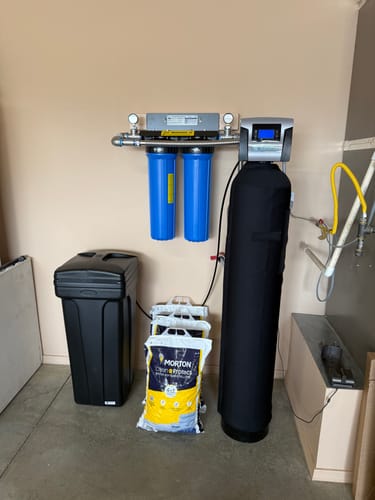
Researching water softeners felt like learning a new language filled with technical terms and conflicting advice from every direction.
I started by understanding the science behind hard water treatment. Traditional ion exchange systems swap calcium and magnesium ions for sodium ions using specialized resin beads. Salt-free conditioners use different technologies like Template Assisted Crystallization (TAC) to change mineral structure without actually removing them. Electronic descalers claim to alter mineral behavior through electromagnetic fields.
Each technology had passionate advocates and vocal critics online. Salt-based systems are proven effective but add sodium to water and require ongoing salt purchases. Salt-free systems avoid sodium concerns but many users reported mixed results for severe hardness levels like mine. Electronic units seemed convenient but lacked consistent scientific validation for high-mineral water.
Capacity calculations became crucial since undersized systems regenerate constantly, wasting water and salt while oversized units waste money upfront. I needed to calculate daily water usage (about 240 gallons for our family of four) multiplied by hardness level (18 grains) to determine grain removal requirements – roughly 4,320 grains daily.
Certification standards helped separate legitimate products from marketing hype. I looked for NSF/ANSI Standard 44 certification for performance claims, WQA Gold Seal validation for quality, and third-party testing documentation. Many cheaper units lacked proper certifications or provided vague efficiency claims.
Installation requirements varied dramatically between systems. Some needed professional plumbing modifications, electrical connections, and drain access. Others claimed DIY-friendly installation but required specialized tools and knowledge. I wanted something manageable for a reasonably handy homeowner without major infrastructure changes.
Brand reputation research revealed interesting patterns. Some companies focused on dealer networks with high-pressure sales tactics and inflated pricing. Others sold direct-to-consumer with transparent pricing but limited local support. I prioritized manufacturers with strong technical support, reasonable warranty terms, and proven track records in water treatment.
The SoftPro ECO caught my attention because it balanced proven ion exchange technology with modern efficiency features. The demand-initiated regeneration system promised to regenerate based on actual usage rather than preset timers, potentially saving salt and water. The compact design fit our utility room constraints, and the upflow regeneration design claimed more efficient resin cleaning.
Unboxing and First Impressions: Quality Check
The SoftPro ECO arrived two days ahead of schedule, which immediately impressed me since water treatment equipment often faces shipping delays due to weight and size.

The packaging was genuinely industrial-grade – thick cardboard with foam corner protectors and plastic shrink-wrap that actually protected the unit during transport. Too many online purchases arrive damaged, so this attention to shipping protection suggested good manufacturing standards.
Lifting the unit required two people despite the "compact" marketing claims. At roughly 100 pounds when empty, this thing has substantial build quality that you can feel immediately. The fiberglass tank felt solid without any flex or cheap plastic components I'd seen on some competitor models.
The control head featured a clear LCD display with straightforward menu navigation – no tiny buttons or cryptic symbol combinations. The programming interface looked modern compared to older mechanical systems I'd researched. All electrical connections appeared properly sealed with weatherproof gaskets.
Component inspection revealed thoughtful design choices throughout. The bypass valve assembly used brass fittings instead of plastic, suggesting durability for long-term operation. The drain line connection included a proper air gap fitting to prevent backflow contamination. Even the salt tank lid had a secure latching mechanism that wouldn't accidentally open.
However, my excitement dimmed quickly when I opened the documentation package. The installation manual was clearly written for professional installers, not homeowners. Technical diagrams assumed knowledge of plumbing codes and valve types that I didn't possess. The "quick start" guide was anything but quick, jumping between installation steps and programming procedures without clear sequence.
Most frustrating was the complete absence of troubleshooting guidance or common installation scenarios. The manual covered perfect installations but provided no help for the real-world situations most homeowners encounter – like existing plumbing that doesn't match standard configurations or tight space constraints.
Installation Experience: Challenges and Solutions

Installing the SoftPro ECO turned into a week-long project that tested both my patience and my plumbing skills more than I'd anticipated.
Pre-installation preparation took longer than expected. I needed to locate the main water line entry point, identify suitable drain access for backwash discharge, and ensure adequate clearance around the unit for maintenance. Our utility room barely met minimum space requirements, requiring creative positioning to allow salt loading and future service access.
The bypass valve installation proved most challenging since our existing plumbing used slightly different connection sizes than the provided fittings. I spent half a day at the hardware store finding proper adapters and transition fittings. Professional plumbers probably stock these components, but homeowners face multiple trips and trial-and-error fitting attempts.
Cutting into the main water line felt nerve-wracking since any mistake would shut off water to the entire house. I followed every precaution – shutting off water at the meter, draining all lines, double-checking measurements – but that first pipe cut still required courage. The provided installation diagram showed perfect straight runs while my plumbing required working around existing lines and structural elements.
Electrical connection was straightforward once I located a proper outlet. The unit requires standard 115V power but the cord length meant adding an extension or installing a new outlet. I chose the new outlet route for safety and aesthetics, adding another day to the project timeline.
Programming the control head took multiple attempts and online research beyond the provided documentation. The manual explained individual menu options but not the logical sequence for initial setup. I eventually found helpful YouTube videos from other users that walked through first-time configuration step-by-step.
Initial regeneration testing revealed proper operation but highlighted the importance of correct drain line positioning. The backwash cycle produces significant water flow that can overwhelm inadequate drainage or create noise issues if not properly routed. I had to adjust the drain line twice to eliminate a slight backup during peak flow periods.
The most valuable lesson learned was that "DIY-friendly" installation still requires significant plumbing knowledge and problem-solving skills.
Budget extra time and don't hesitate to consult a professional for complex plumbing situations.
Performance Analysis: Real-World Water Quality Results
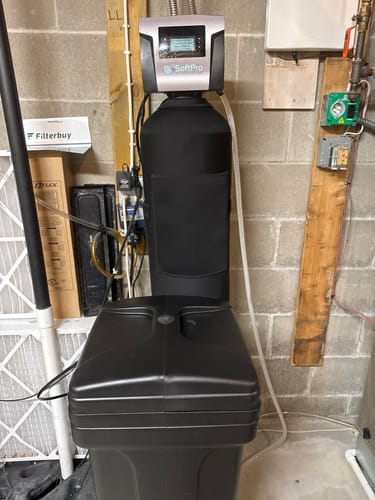
After three weeks of operation, I began systematic testing to measure actual performance against manufacturer claims and my household's specific water conditions.
Baseline testing with my TDS meter showed incoming hardness averaging 18 grains per gallon, with some daily variation between 16-20 grains depending on municipal system demands. Post-softener testing consistently showed less than 1 grain per gallon hardness – excellent results that met NSF certification standards for efficient ion exchange operation.
The most noticeable immediate improvement was in soap performance throughout the house. Laundry detergent suddenly created abundant suds that actually cleaned clothes instead of forming that grayish film we'd grown accustomed to. Dish soap worked properly again, cutting through grease instead of leaving spots and residue on everything.
Shower and bathing experiences improved dramatically within days. My wife's hair returned to its normal texture and manageability, while our skin stopped feeling tight and itchy after bathing. We could use standard amounts of shampoo and body wash instead of the excessive quantities required with hard water.
Kitchen appliances showed remarkable improvement over the first month. Our dishwasher began producing spotless glassware again, eliminating the need for rinse aids and multiple wash cycles. The espresso machine operation smoothed out significantly, with consistent pressure and temperature that indicated reduced internal mineral buildup.
I monitored regeneration frequency to assess system efficiency and salt consumption. With our family's 240-gallon daily usage and 18-grain hardness, the demand-initiated regeneration triggered approximately every 4-5 days. Each cycle consumed roughly 8 pounds of salt and 45 gallons of water for backwashing – reasonable consumption that aligned with manufacturer specifications.
Water pressure remained consistent throughout the house during normal operation. I measured 52 PSI at kitchen faucets compared to 58 PSI before installation – a minimal reduction that didn't affect daily usage. Some online reviews mentioned pressure drops, but proper sizing and installation maintained adequate flow rates for simultaneous usage.
Taste improvement was subtle but noticeable, especially in coffee and tea preparation. Hard water minerals don't create obvious taste issues for most people, but their absence allowed actual beverage flavors to emerge more clearly. We gradually reduced bottled water purchases as tap water became genuinely pleasant to drink.
Long-term testing over six months confirmed consistent performance without degradation. Hardness levels remained below 1 grain per gallon, regeneration frequency stayed predictable, and salt consumption matched initial calculations. The system adapted well to seasonal usage variations and maintained efficiency through varying input water conditions.
Daily Living Impact: Household Transformation
Six months of soft water has transformed daily household routines in ways I never anticipated when researching water treatment systems.
Laundry day became noticeably more efficient and economical. Clothes come out cleaner with half the detergent we used previously, and colors stay vibrant instead of gradually dulling from mineral deposits. White shirts stay actually white instead of developing that grayish tinge that hard water creates over time. Fabric softener is almost unnecessary now since clothes naturally feel softer without mineral buildup.
Bathroom cleaning dropped from a weekly softpro water softener struggle to monthly maintenance. Soap scum formation slowed dramatically, making shower cleaning quick and easy instead of requiring aggressive scrubbing with harsh chemicals. Faucets and fixtures stay shiny longer, and that stubborn white buildup around drains became a thing of the past.
Kitchen operations improved beyond my initial expectations. Our coffee tastes consistently better – we actually taste the beans now instead of mineral interference. Ice cubes freeze crystal clear instead of cloudy, and they don't leave white residue in drinks as they melt. Even pasta water behaves differently, requiring less salt for proper cooking since minerals aren't interfering with the process.
Personal care routines evolved as we adjusted to actually clean water. Soap and shampoo work so much more effectively that we initially over-used products out of habit. My wife discovered her hair's natural texture for the first time in years, and both of us noticed softer skin without needing extra moisturizers after showering.
Appliance maintenance schedules changed significantly. I no longer descale the espresso machine monthly – now it's quarterly. The dishwasher runs efficiently on shorter cycles since soap works properly. Our humidifier stopped developing white dust deposits that previously required weekly cleaning.
Unexpected benefits emerged over time. House guests consistently comment on water quality, especially those from other hard water areas who immediately notice the difference. Our children stopped complaining about "itchy" feelings after baths. Even our plants seem healthier with soft water, though that might be psychological.
The economic impact became clear after six months. We've eliminated bottled water purchases, reduced cleaning supply consumption by roughly half, and extended appliance lifespan through reduced mineral damage. Conservative calculations suggest $40-60 monthly savings, easily offsetting salt costs and system maintenance.
Operating Costs and Long-Term Economics
Understanding the true cost of water softener ownership required tracking expenses beyond the initial purchase price over my six months of operation.
Salt consumption averaged 35-40 pounds monthly, costing approximately $8-12 depending on where I purchase. Bulk buying from warehouse stores offers better pricing than grocery store purchases. I learned that salt quality matters – cheaper rock salt left more residue in the brine tank compared to solar salt crystals that dissolve completely.
Water usage for regeneration cycles adds roughly 180-200 gallons monthly to our utility bill. At San Antonio water rates, this translates to about $3-4 monthly in additional water costs. The environmental impact concerns me slightly, but the system's efficiency minimizes waste compared to older timer-based models that regenerate unnecessarily.
Electricity consumption is negligible since the control head only operates during regeneration cycles and monitoring functions. The LCD display and valve motor add maybe $2-3 annually to electric bills – essentially nothing compared to other appliance operations.
Maintenance costs remain minimal after the initial installation investment. Annual resin bed cleaning with iron-out solution costs about $15, and the control head requires battery replacement every 2-3 years at $8-10. No major component replacements have been necessary, though I budget for potential repairs after the warranty period.
Household savings calculations show impressive returns on investment. We've eliminated $25-30 monthly bottled water expenses, reduced cleaning supply costs by approximately $15 monthly, and extended appliance lifespan significantly. Conservative estimates suggest $600-800 annual savings against system ownership costs of $200-250 annually.
Professional service isn't required for routine maintenance, but I budgeted for annual professional inspection at $75-100. Many homeowners skip this expense, but professional technicians can identify potential issues before they become expensive problems. The peace of mind justifies the modest cost.
Comparing ownership economics to bottled water alternatives makes the investment obvious. Our previous bottled water expenses alone exceeded annual system operating costs, without addressing appliance damage and cleaning inefficiencies that hard water created throughout the house.
Long-term financial projection over ten years shows substantial positive return on investment, even accounting for potential repairs, component replacements, and rising salt costs. The system pays for itself within 18-24 months through documented savings, then provides net positive cash flow thereafter.
Final Assessment: Worth the Investment
After six months of real-world testing, the SoftPro ECO has exceeded my expectations in performance while teaching me valuable lessons about water treatment system ownership.
The most significant success has been consistent, reliable water softening that eliminated every hard water problem I initially faced. No more mineral buildup on fixtures, no more appliance damage from scale deposits, and no more frustration with ineffective soaps and detergents. The system delivers exactly what it promises without compromise or gradual performance degradation.
Installation challenges were more significant than marketing materials suggested, requiring genuine plumbing knowledge and problem-solving skills. Homeowners without DIY experience should budget for professional installation to avoid frustration and potential mistakes. However, once properly installed, the system operates reliably without constant attention or adjustment.
Operating economics prove strongly positive through measurable household savings and improved quality of life. While salt costs and maintenance add ongoing expenses, the elimination of bottled water, reduced cleaning supplies, and appliance protection create net positive cash flow within two years of ownership.
Build quality and engineering design demonstrate professional-grade standards that justify the premium pricing over basic consumer models. The demand-initiated regeneration, upflow design, and robust components suggest this system will provide reliable service for many years with proper maintenance.
Customer support responsiveness impressed me during initial setup questions, though I wish the documentation provided clearer guidance for homeowner installations. Technical support personnel demonstrated genuine expertise and patience with my novice-level questions.
Would I recommend the SoftPro ECO to other homeowners facing hard water problems?
Absolutely, with the caveat that proper sizing, professional installation consideration, and realistic expectations about ongoing maintenance are essential for success.
This system works exceptionally well for households with significant hard water issues who want proven ion exchange technology with modern efficiency features. The investment makes financial sense for families spending substantial amounts on bottled water, dealing with appliance damage, or simply tired of hard water's daily inconveniences.
For homeowners with mild hardness or tight budgets, simpler solutions might provide adequate results at lower cost. But for serious hard water problems like we faced in San Antonio, the SoftPro ECO delivers reliable, comprehensive treatment that transforms household water quality and justifies every dollar invested.