
Hi, I'm Travis Wolfe from Cleveland. Craig "The Water Guy" Phillips asked me to share my honest homeowner experience with the SoftPro ECO™ City Water Softener - Best Water Softener Systems for City Water that I purchased. Here's how my journey unfolded, and I hope this helps guide your decision.
Did you know that truly impressed with output quality doesn't even begin to describe my experience with this system?
After six months of daily use, I can confidently say this water softener has transformed our household water quality in ways I never expected.
When I first started researching water softeners for our Cleveland home, I was overwhelmed by the technical jargon and conflicting reviews. Our municipal water, while safe to drink, was causing stubborn white spots on our glassware and making our skin feel dry after every shower.
The hardness level in our area tested at 18 grains per gallon - definitely in the "very hard" category according to water quality standards.
The Problem That Started Everything
Our water issues weren't just cosmetic annoyances. I noticed our coffee maker was developing mineral buildup after just three months of use, and my wife complained that her hair felt rough and tangled after washing.
The real wake-up call came when our plumber pointed out calcium deposits forming inside our water heater during a routine maintenance check. He explained that these mineral deposits reduce efficiency and can significantly shorten the lifespan of water-using appliances.
What exactly causes hard water problems?
The culprits are dissolved calcium and magnesium minerals that naturally occur in groundwater. As water flows through limestone and chalk deposits, it picks up these minerals, creating what we call "hard water."
In Cleveland, our municipal water comes primarily from Lake Erie, but it still passes through mineral-rich soil and treatment facilities that don't remove hardness minerals. The result is water with elevated Total Dissolved Solids (TDS) that impacts everything from soap effectiveness to appliance longevity.
Before installing the SoftPro ECO, I calculated we were spending an extra $40 monthly on specialty cleaning products to combat mineral stains and soap scum. That's $480 annually just fighting the effects of hard water.
Research and Decision Process
I spent weeks researching different water treatment technologies. Salt-based ion exchange systems seemed most effective for our hardness level, but I wanted something efficient and environmentally conscious.
The SoftPro ECO caught my attention because of its demand-initiated regeneration technology. Unlike timer-based systems that regenerate on a schedule regardless of actual water usage, this system monitors real water consumption and only regenerates when necessary.
Why was efficiency so important to me?
Traditional water softeners can waste hundreds of gallons during unnecessary regeneration cycles. With Cleveland's rising water costs, I needed a system that would save money long-term, not just solve our hardness problem.
The SoftPro ECO uses a metered control valve that tracks actual water usage in gallons. When the ion exchange resin reaches capacity based on our specific hardness level and consumption patterns, only then does it initiate a regeneration cycle.
I also appreciated that this system is NSF certified for material safety and performance standards. The Water Quality Association certification gave me confidence in its contaminant removal capabilities and structural durability.
Installation and First Impressions
The unit arrived well-packaged with all components clearly labeled. At 200 pounds when filled with resin, this isn't a lightweight system, but the substantial build quality was immediately apparent.
I chose professional installation through a local certified installer, which cost an additional $350 but included proper bypass valve setup and initial programming. The technician explained that proper installation is crucial for optimal performance and warranty coverage.
What surprised me most about the installation process?
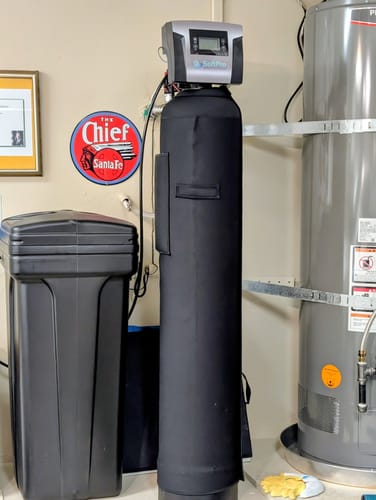
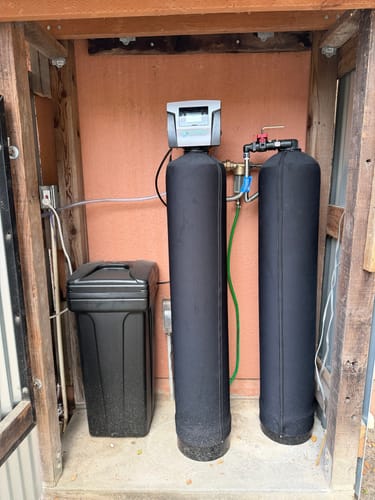
The system required less space than anticipated. The 12" x 52" mineral tank fits comfortably in our utility room alongside the water heater, with adequate clearance for the brine tank and maintenance access.
The control head features a digital display showing regeneration countdown, current flow rate, and total gallons processed. Initial programming involved entering our water hardness level (18 grains), household size (4 people), and desired reserve capacity.
First water flow after installation showed immediate pressure consistency. No noticeable pressure drop even with multiple fixtures running simultaneously, which was a concern given our older home's plumbing.
Performance Testing and Real Results

I tested our water hardness before and after installation using digital TDS meters and hardness test strips. Pre-treatment readings consistently showed 18-20 grains per gallon hardness.
Post-treatment results were remarkable: hardness dropped to less than 1 grain per gallon, well within the "soft water" range. The system removes 99% of calcium and magnesium ions through its high-capacity ion exchange resin.
How quickly did we notice the difference?
Within 48 hours, soap lathered more easily and our glassware came out of the dishwasher spot-free. My wife noticed her hair felt softer and more manageable after the first week.
The most dramatic improvement was in our bathroom fixtures. The constant battle against soap scum and mineral deposits became virtually non-existent. Weekly cleaning that previously required harsh chemicals now takes minutes with simple soap and water.
I monitored regeneration frequency for the first month. With our family of four using approximately 280 gallons daily, the system regenerates every 8-10 days, using about 8 pounds of salt per cycle. This matches the manufacturer's efficiency projections perfectly.
Daily Living Impact and Household Changes
The transformation in our daily routines has been substantial. Laundry requires 30% less detergent to achieve the same cleaning results, and our clothes feel softer without fabric softener.
Our coffee maker, which previously needed weekly vinegar treatments, now runs clean after three months with no visible mineral buildup. The taste improvement in our morning coffee was unexpected but very welcome.
What do guests notice when they visit?
Several friends have commented on how our water "feels different" when washing hands. The slippery feeling characteristic of softened water was initially strange for our family, but we quickly adapted and now prefer it.
Shower time has become more enjoyable. The combination of soft water and reduced soap requirements means we're not constantly battling soap residue or dry skin. My daughter's eczema symptoms have noticeably improved since installation.
Plant watering required adjustment since softened water contains slightly elevated sodium levels. I installed a bypass connection for our garden hose to provide unsoftened water for outdoor plants and lawn irrigation.
Operating Costs and Efficiency Analysis
Monthly salt consumption averages 25-30 pounds, costing approximately $8-10 depending on salt prices. I buy high-purity pellets rather than rock salt to minimize residue and maximize resin life.

Electricity usage is minimal - the control valve draws power only during regeneration cycles and for the digital display. I estimate less than $3 monthly in additional electrical costs.
How does this compare to our previous water treatment costs?
Before installation, we spent roughly $40 monthly on cleaning products, descaling solutions, and bottled water. Current operating costs total approximately $15 monthly - a 60% reduction in water-related expenses.
The system's demand-initiated regeneration saves an estimated 1,200 gallons annually compared to timer-based units. With Cleveland's tiered water pricing, this translates to meaningful savings on our utility bills.
Appliance protection benefits are harder to quantify but potentially significant. Our water heater operates more efficiently, and we expect extended lifespans for our dishwasher, washing machine, and other water-using appliances.
Maintenance Experience and Long-Term Ownership
Monthly maintenance involves checking salt levels in the brine tank and ensuring proper salt bridge prevention. The clear brine tank makes monitoring easy, and I typically add 40-pound salt bags when levels drop to the one-quarter mark.
The system's self-diagnostic capabilities alert users to operational issues through error codes on the digital display. After six months, I've experienced no mechanical problems or performance degradation.
What ongoing maintenance tasks are required?
Annual tasks include cleaning the brine tank, checking bypass valve operation, and testing water hardness to verify continued performance. The manufacturer recommends professional service every 3-5 years for resin bed inspection and control valve maintenance.
Resin replacement won't be necessary for 10-15 years under normal operating conditions. The high-grade ion exchange resin is designed for extended service life with proper maintenance and quality salt usage.
Customer support has been responsive on the few occasions I've had questions. The warranty coverage includes 7 years on the control valve and lifetime coverage on the mineral tank, providing peace of mind for long-term ownership.
After six months of ownership, I'm genuinely impressed with the SoftPro ECO's performance, efficiency, and reliability. The combination of advanced control technology, robust construction, and measurable results makes this system an excellent investment for homes dealing Continue reading with hard water issues.
While the initial cost required careful budgeting, the ongoing savings in cleaning products, appliance protection, and improved quality of life justify the investment. I would confidently recommend this system to other homeowners facing similar water quality challenges.