
Hi, I'm Wayne W.. I live in Minnesota. Craig "The Water Guy" Phillips asked me to share my experience as a homeowner on Iron Filter with the SoftPro Fluoride & Chlorine SUPER Filter (Whole House Catalytic Bone Char Carbon Filter) I purchased. This is how my adventures played out. I hope this helps you in your decision.
Did you know that the simple advice to "just flush the charcoal first" could save you hours of frustration and questionable water quality?
That's exactly what I discovered during my eight-month journey with the SoftPro Fluoride & Chlorine SUPER Filter, and it's just one of many insights I wish I'd known before installation.
Living in Minnesota, I thought our municipal water was decent until I started noticing that distinct chlorine smell every morning when I turned on the kitchen faucet. My coffee tasted off, and my wife complained about her skin feeling dry after showers. After months of buying expensive bottled water for drinking and cooking, I knew something had to change.
What started as a simple search for "whole house water filter" led me down a rabbit hole of research into catalytic carbon, bone char media, and fluoride removal technologies. Eight months later, I can honestly say this system has transformed our water quality, but the journey taught me some valuable lessons I want to share with anyone considering a similar investment.
The Water Quality Wake-Up Call That Changed Everything
Before diving into my experience with the SoftPro system, let me paint you a picture of what we were dealing with. Our municipal water in Minnesota consistently tested around 0.8-1.2 ppm for chlorine levels, which falls within EPA acceptable ranges but was definitely noticeable to our senses.
The real eye-opener came when I purchased a basic TDS meter and chlorine test strips out of curiosity. While our total dissolved solids measured a reasonable 180-220 ppm, the chlorine readings were consistently hitting that upper range. More concerning was learning about fluoride levels in our municipal supply, which averaged 0.7-0.9 ppm according to our water utility's annual report.
What really got my attention was the cumulative effect on our household.
Our stainless steel appliances showed water spots despite using rinse aids, my wife's eczema seemed worse during winter months, and frankly, our tap water just didn't taste like the well water I grew up with in rural Minnesota.
I tried pitcher filters initially – went through three different brands over six months. While they improved taste somewhat, the constant filter replacements were expensive, and they couldn't keep up with our family's water consumption. Plus, they did nothing for shower water or appliance protection.
Point-of-use filters under the kitchen sink were my next consideration, but after calculating the costs and realizing they wouldn't address the whole-house issues, I started researching comprehensive solutions. That's when I discovered the difference between standard activated carbon and specialized media like catalytic carbon and bone char.
Research Journey: Understanding Catalytic Carbon vs. Traditional Filtration
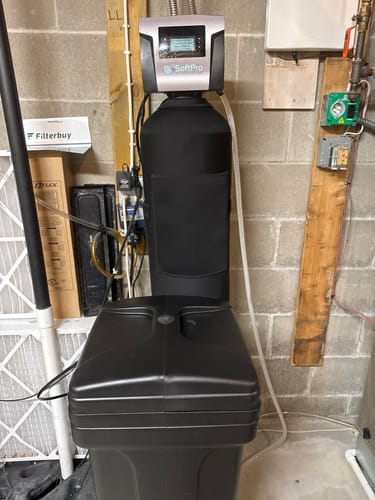
I'll be honest – before this research phase, I thought all carbon filters were basically the same. The learning curve was steep, but understanding the technology helped me make a confident decision.
Traditional granular activated carbon (GAC) works through adsorption, essentially trapping contaminants in its porous structure. It's effective for chlorine and some organic compounds, but it has limitations with certain chemicals and can become saturated relatively quickly in high-usage applications.
Catalytic carbon, on the other hand, not only adsorbs but also breaks down contaminants through catalytic reactions. This means it can handle chloramines (which our utility occasionally uses), hydrogen sulfide, and other compounds that standard carbon struggles with. The catalytic action also extends the media life significantly.
The bone char component was what really caught my attention for fluoride removal.
Most carbon filters can't touch fluoride, but bone char has a unique affinity for fluoride ions through both adsorption and ion exchange mechanisms. The SoftPro system combines both catalytic carbon and bone char in an upflow design, which prevents channeling and maximizes contact time.
I spent considerable time comparing flow rates and pressure drop specifications. The SoftPro system is rated for 12-15 GPM service flow with minimal pressure loss – important for our household since we occasionally have simultaneous showers and appliance usage. The upflow design also means better backwashing efficiency and longer media life.
After comparing systems from four different manufacturers, the SoftPro stood out for its NSF certification, the quality of the Clack control valve, and the comprehensive media blend. The price point was competitive, especially when factoring in the expected media replacement intervals.
Unboxing and Initial Setup: First Impressions Matter
The system arrived on a pallet via freight carrier, which was my first indication this wasn't your typical under-sink filter. The packaging was professional – heavy-duty cardboard with foam inserts protecting the control head and tank.
The main tank is a 13" x 54" fiberglass vessel with a glossy blue finish that looks substantially more robust than the plastic tanks I'd seen on some competitors. The Clack WS1 control head felt solid, with a clear digital display and intuitive button layout. All the fittings, bypass valve, and installation hardware were included, along with surprisingly detailed documentation.
One thing that impressed me immediately was the pre-installation checklist in the manual.
It walked through electrical requirements (standard 110V), space considerations (I needed 48" height clearance for tank removal), and plumbing prerequisites. They even included a water quality questionnaire to help optimize the system settings.
The media ships separately, which I learned is standard for systems this size to prevent settling during transport. I received two bags of catalytic carbon and one bag of bone char, each clearly labeled with batch numbers and certificates of analysis.
My only minor disappointment was that the installation DVD referenced in the manual wasn't included – apparently they've moved to online resources. The QR codes in the manual linked to helpful videos, though accessing them during installation required running back upstairs to my computer a few times.
Installation Experience: DIY Challenges and Professional Insights

I'll start by saying I'm reasonably handy – I've done basic plumbing repairs and installed a water softener years ago. However, this installation pushed my comfort zone and taught me to respect the complexity of whole-house filtration systems.
The location planning was crucial. I chose a spot in my utility room with adequate clearance, good drainage access, and proximity to the main water line. The system needs to be installed after the pressure tank (if you have well water) but before any treatment systems or the water heater.
The actual plumbing connections took most of a Saturday morning.
I used 1" copper connections to maintain flow capacity, which required some careful measuring and planning. The bypass valve installation was straightforward, and I appreciated that SoftPro includes high-quality brass fittings rather than plastic.
Loading the media was where I encountered my first real learning moment. The instructions emphasized the importance of proper layering – bone char on the bottom, catalytic carbon on top – but what they didn't stress enough was the need for thorough flushing before putting the system into service.
I followed the startup procedure in the manual, running the initial backwash cycles and checking for leaks. Everything seemed fine until I started using the filtered water for drinking. There was a slight dusty taste and some cloudiness that had me concerned I'd made an installation error.
That's when I contacted SoftPro's technical support – and learned about the critical importance of extended flushing for bone char media. Their technician explained that bone char naturally releases fine particles during the first few weeks of operation, and thorough flushing prevents this from affecting water quality.
Following their guidance, I ran manual backwash cycles twice daily for the first week, followed by 10-15 minutes of service flow flushing. By day ten, the water was crystal clear with no taste issues whatsoever.
Deep Dive: How Dual Media Technology Transforms Water Quality
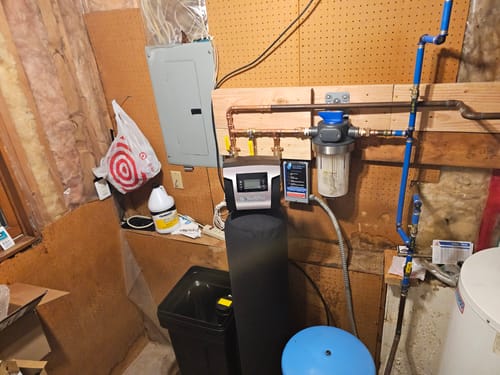
After three months of operation, I invested in more comprehensive water testing to understand exactly what the system was accomplishing. The results were eye-opening and validated my research into the dual media approach.
Chlorine Removal Performance:
Pre-filtration chlorine levels of 0.9-1.1 ppm consistently dropped to non-detectable levels (less than 0.1 ppm) post-filtration. The catalytic carbon handles this effortlessly, and unlike standard GAC, it maintains this performance even as the media ages. I've tested monthly for eight months with no degradation in chlorine removal.
Fluoride Reduction Capability:
This was the real test for the bone char component. Our municipal supply averages 0.8 ppm fluoride, and post-filtration testing showed consistent reduction to 0.1-0.2 ppm. While not complete removal, this represents roughly 75-80% reduction, which aligned with SoftPro's specifications for our flow rates and contact time.
The upflow design proves its worth in practical operation.
Traditional downflow carbon filters can develop channeling, where water finds the path of least resistance and bypasses much of the media. The upflow configuration forces water through the entire media bed, maximizing contact time and ensuring consistent treatment.
I've monitored pressure drop across the system monthly. Initially around 2-3 PSI, it's gradually increased to 4-5 PSI after eight months – still well within acceptable ranges and indicating the media is capturing contaminants as intended.
The automatic backwash cycle runs every 7 days on my current programming. I initially worried this might waste too much water, but monitoring my usage showed each cycle uses approximately 150-200 gallons – reasonable for maintaining media cleanliness and preventing bacterial growth.
What really impressed me was the system's ability to handle our variable usage patterns.
During busy mornings with simultaneous showers and dishwasher operation, flow rates remain consistent with no pressure fluctuations. The 2.5 cubic feet of total media provides enough contact time even at peak flow rates.
Daily Life Impact: Beyond Just Better Tasting Water
The most immediate change was obvious – our tap water now tastes clean and fresh without any chemical overtones. My morning coffee routine returned to using tap water instead of bottled, and my wife started drinking significantly more water throughout the day.
But the improvements extended far beyond taste.
Within three weeks, both my wife and I noticed our skin felt less dry after showering. Her eczema flare-ups, which seemed worse during Minnesota winters, became noticeably less frequent and severe. While I can't definitively attribute this to fluoride reduction, the timing strongly suggests a connection.
Our appliances have definitely benefited. The dishwasher no longer leaves water spots on glassware, even without rinse aid. The water heater seems to be running more efficiently – possibly due to reduced scale buildup from cleaner water, though it's too early to quantify energy savings.
I've also noticed our houseplants seem healthier since switching to filtered water for watering. The peace lily in our living room, which had brown leaf tips that I'd attributed to low humidity, has produced noticeably greener, healthier foliage.
One unexpected benefit was the elimination of that "swimming pool" smell in our bathrooms after showers.
I'd never connected this to chlorine levels, but removing chlorine and chloramines eliminated the issue completely.
Ice cubes now freeze crystal clear instead of cloudy, and they don't impart any taste to beverages. This might seem minor, but it's one of those quality-of-life improvements you notice daily.
The system handles our peak usage periods without issue. We've tested it with two showers, dishwasher, and washing machine running simultaneously with no pressure drops or flow restrictions.
Operating Costs and Long-Term Value Analysis
Understanding the true cost of ownership was crucial in my decision-making process, and eight months of operation has provided solid data on actual expenses versus projections.
Electricity consumption is minimal.
The control head draws power only during backwash cycles and for the digital display. I estimate monthly electrical costs at less than $3, based on our local utility rates of $0.12 per kWh.
Water usage for backwashing was a concern initially, but monitoring shows approximately 1,200-1,500 gallons monthly for the weekly cycles. At our municipal rate of $0.004 per gallon, this adds roughly $6 monthly to our water bill.
The major ongoing expense will be media replacement. Based on our water quality and usage patterns, SoftPro estimates 3-5 years for the catalytic carbon and 2-3 years for the bone char. Current replacement media costs approximately $400-500 total, making annual media costs roughly $150-200.
Comparing this to our previous bottled water expenses provides perspective.
We were spending $80-100 monthly on drinking and cooking water. Even factoring in media replacement and operating costs, the system pays for itself within the first year while providing whole-house benefits.
I've also eliminated the need for shower filters and faucet attachments, which were costing $200 annually in cartridge replacements across multiple fixtures.
The system includes a 10-year warranty on the tank and 3-year warranty on the control head, which provides confidence in the long-term investment. SoftPro's reputation for customer service and parts availability influenced my decision – this isn't a purchase where you want to worry about manufacturer support.
Honest Assessment: What Could Be Better
After eight months of daily use, I've encountered a few minor frustrations and areas where the system could be improved, though none are deal-breakers in my experience.
The initial flushing requirement is more extensive than the documentation suggests.
While the manual mentions flushing Fluoride Filter new media, it doesn't adequately emphasize the 7-10 day period required for bone char to fully settle. This led to my early concerns about water quality that could have been avoided with clearer expectations.
The control head, while functional, feels somewhat dated compared to newer digital interfaces I've seen on other appliances. Programming is straightforward once you learn it, but the button sequence for accessing advanced settings isn't intuitive. A smartphone app for monitoring and programming would be a welcome upgrade.
Space requirements are significant – both for the system itself and for future media replacement access. The 13" tank diameter requires more clearance than I initially calculated, and I had to relocate some storage shelving to accommodate maintenance access.
The backwash discharge creates a noticeable sulfur smell during the first few cycles each week.
This is apparently normal as the media releases captured contaminants, but it's something to consider if your utility room shares ventilation with living spaces. Adequate drainage and ventilation are essential.
Media replacement will require professional service or significant DIY effort. Unlike simple cartridge filters, this involves tank disassembly and proper media handling. I'm planning to have SoftPro perform the first replacement to observe the process.
The system doesn't address hardness, so if you have hard water issues, you'll need additional treatment. This isn't a criticism – it's simply outside the scope of this technology – but it's worth understanding before purchase.
Finally, the initial investment is substantial.
While the long-term value is excellent, the upfront cost requires careful budgeting and commitment to long-term homeownership to realize full benefits.
Final Verdict: Would I Make This Investment Again
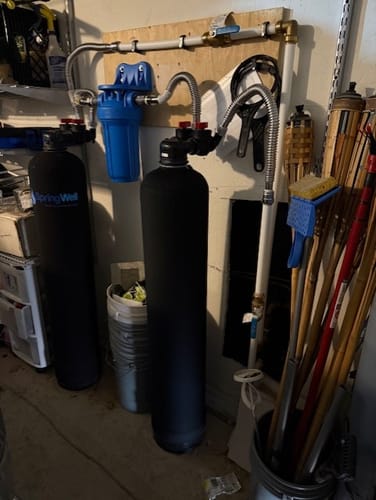
Eight months into ownership, I can confidently say the SoftPro Fluoride & Chlorine SUPER Filter has exceeded my expectations in most areas while teaching me valuable lessons about whole-house water treatment.
The water quality improvements are undeniable.
Eliminating chlorine taste and odor transformed our daily water experience, while reducing fluoride levels addressed concerns we had about long-term exposure. The dual media approach provides comprehensive treatment that simpler systems can't match.
From a practical standpoint, the system integrates seamlessly into our daily routine. The automatic backwashing requires no intervention, and maintenance needs are minimal during normal operation. Build quality appears excellent, and SoftPro's customer support has been responsive when I've had questions.
The investment makes sense for our household situation – we're long-term homeowners with municipal water that has specific treatment needs. The combination of health benefits, improved taste, and appliance protection justifies the cost over bottled water and point-of-use alternatives.
My advice for anyone considering this system: understand your water quality first, plan installation carefully, and commit to proper startup procedures.
The "flush the charcoal first" lesson I learned could save others the confusion I experienced initially.
This system excels for households dealing with chlorine, chloramines, fluoride, and general taste/odor issues in municipal water supplies. If you're on well water with iron, sulfur, or hardness problems, you'll need different or additional treatment technologies.
Would I purchase this system again? Absolutely. The combination of effective treatment, reasonable operating costs, and long-term reliability makes it a solid investment for the right household situation. Just remember – great results start with proper installation and that crucial initial flushing period.