
Hi, I'm Kevin M.. I live in Houston.
Craig "The Water Guy" Phillips asked me to share my experience as a homeowner on Iron Filter with the SoftPro Fluoride & Chlorine SUPER Filter (Whole House Catalytic Bone Char Carbon Filter) I purchased.
This is how my adventures played out. I hope this helps you in your decision.
Six months ago, I thought our city water was perfectly fine. Sure, it met all the regulatory standards, and we'd never had any major issues. But when my daughter started experiencing red, itchy eyes and uncontrollable sneezing every time she showered, I knew something had to change. What started as a simple search for a solution turned into a complete transformation of our household water quality – and honestly, I wish I'd made this change years ago.
The SoftPro Fluoride & Chlorine SUPER Filter has been nothing short of a miracle in our home. My daughter now calls it exactly that – her "miracle filter." But beyond solving her immediate health concerns, this whole house system has delivered improvements I never expected, from better-tasting coffee to softer skin for the entire family.
In this detailed review, I'll walk you through my complete six-month journey with this catalytic bone char carbon filtration system. You'll learn about the installation process, real-world performance data I've collected, ongoing costs, and honest limitations I've discovered. Most importantly, I'll help you determine whether this investment makes sense for your specific situation.
The Water Quality Wake-Up Call That Started Everything
Living in Houston, I'd grown accustomed to our municipal water system. The city consistently meets EPA standards, and I never questioned what was actually flowing through our pipes. That changed dramatically when my 12-year-old daughter Emma started having severe reactions every time she showered.
The symptoms were immediate and concerning. Within minutes of stepping into the shower, her eyes would turn red and begin watering uncontrollably. The sneezing fits were so intense that she'd have to cut her showers short. Initially, we thought she'd developed some kind of allergy or sensitivity to a new shampoo or body wash.
But was it really just a product sensitivity?
After eliminating every possible culprit – switching to hypoallergenic soaps, changing detergents, even replacing our showerhead – the symptoms persisted. That's when I started researching our actual water quality and discovered some uncomfortable truths about what "safe" municipal water really contains.
Houston's water treatment facilities add chlorine and chloramines as disinfectants, which are essential for eliminating harmful bacteria during distribution. However, these chemicals don't magically disappear when the water reaches your home. Chlorine levels in our area typically range from 2.0 to 4.0 parts per million (PPM), and chloramines can persist even longer in the system.
I purchased a basic water testing kit and discovered our tap water contained 3.2 PPM of chlorine, along with fluoride levels at 0.8 PPM – both within "acceptable" ranges but clearly problematic for sensitive individuals. The chlorine was likely causing Emma's respiratory and eye irritation, similar to what some people experience in heavily chlorinated swimming pools.
Did you know that chlorine can form trihalomethanes (THMs) when it reacts with organic matter in water pipes?
These byproducts, while regulated, can cause skin and respiratory irritation in sensitive individuals. Additionally, fluoride, while beneficial for dental health in small amounts, can accumulate in the body over time and some families prefer to control their fluoride intake through toothpaste rather than drinking water.
The health implications extended beyond Emma's immediate symptoms. I learned that long-term chlorine exposure through showering and drinking can dry out skin and hair, potentially exacerbate eczema, and even affect the beneficial bacteria in our digestive systems. The volatile nature of chlorine also means we were inhaling it during hot showers, essentially turning our bathroom into a low-level gas chamber.
Beyond health concerns, I started noticing other issues I'd previously attributed to "normal" city living. Our white clothes gradually developed a dingy appearance despite using quality detergents. Coffee and tea had a subtle but persistent chemical aftertaste. Our stainless steel fixtures showed water spots that required constant cleaning. Even our houseplants seemed lackluster compared to when I used bottled water.
The financial impact was also adding up. We'd started buying bottled water for drinking and cooking – roughly $40 monthly for a family of four. Emma had begun taking shorter showers to minimize her discomfort, but that wasn't a sustainable solution for a pre-teen who needed to maintain proper hygiene.
After six weeks of failed attempts to solve the problem through product changes and shorter exposure times, I realized we needed a comprehensive solution that would address the root cause: the chemical content of our municipal water supply.
Research Journey: Understanding Water Filtration Technologies
Once I committed to finding a whole-house solution, I dove deep into water filtration technologies. The learning curve was steeper than expected – the industry is Fluoride Filter filled with technical jargon, competing claims, and widely varying price points. Here's what I discovered during my three-week research phase.
My first consideration was the scope of filtration needed. Point-of-use filters (like pitcher filters or faucet-mounted units) would only address drinking water, leaving the shower and laundry problems unsolved. Shower filters were an option for Emma's immediate symptoms, but they typically have limited capacity and don't address whole-house water quality.
Whole house systems fell into several categories, each with distinct advantages and limitations. Basic sediment filters remove particles and debris but don't address chemical contaminants like chlorine and fluoride. Standard carbon filters can handle chlorine effectively but struggle with fluoride and chloramines. Water softeners excel at removing hardness minerals but don't address chemical disinfectants.
The technology that kept appearing in my research was catalytic carbon combined with bone char carbon – specifically designed to tackle both chlorine/chloramines and fluoride simultaneously. This dual-media approach seemed ideal for our specific concerns, but I needed to understand how it actually worked.
Catalytic carbon is an enhanced form of activated carbon that's been treated to improve its ability to remove chloramines (not just chlorine). Regular activated carbon can handle free chlorine through a simple chemical reaction, but chloramines require catalytic conversion to break the chlorine-ammonia bonds. This was crucial because Houston's water system uses chloramines as a secondary disinfectant.
Bone char carbon, derived from animal bones that are heated to high temperatures, creates a unique porous structure that's particularly effective at fluoride removal through both adsorption and ion exchange. Unlike synthetic media that only physically trap contaminants, bone char actually changes fluoride at the molecular level.
The key specifications I learned to evaluate included contact time (how long water stays in contact with the media), flow rate capacity, media volume, and regeneration requirements. A system needs adequate contact time to effectively remove contaminants – typically 2-4 minutes for optimal performance. Flow rate determines whether you'll experience pressure drops during peak usage periods.
Certification standards became another crucial factor. NSF International and the Water Quality Association (WQA) provide independent testing and certification for water treatment products. NSF Standard 42 covers aesthetic effects like taste and odor (chlorine removal). NSF Standard 61 ensures materials don't leach harmful substances into treated water. For fluoride removal, I looked for NSF Standard 58 certification or independent laboratory testing data.
Installation requirements varied significantly between systems. Some required professional installation with specific plumbing modifications, bypass valves, and electrical connections. Others offered more straightforward installation for DIY-capable homeowners. I needed to factor in not just equipment costs but potential installation expenses.
Maintenance considerations were equally important for long-term ownership. Some systems required frequent media replacement, others needed periodic backwashing or regeneration. The ongoing costs and labor requirements would significantly impact the total cost of ownership over 5-10 years.
After evaluating dozen of systems across different price ranges and technologies, the SoftPro Fluoride & Chlorine SUPER Filter consistently appeared as a top contender. It combined catalytic carbon and bone char media in a single upflow system, carried relevant certifications, and included features that addressed my specific concerns about contact time and flow rate maintenance.
Why the SoftPro System Won My Decision
After three weeks of intensive research, several factors made the SoftPro Fluoride & Chlorine SUPER Filter stand out from the competition. The decision wasn't based on price alone – in fact, this system fell into the mid-to-upper price range – but rather on the combination of technology, performance specifications, and long-term value proposition.
The dual-media design immediately caught my attention. Rather than requiring separate systems for chlorine and fluoride removal, this single unit combines catalytic carbon and bone char carbon in an optimized configuration. The upflow design ensures maximum contact time between water and media, which translates to more thorough contaminant removal compared to downflow systems.
Flow rate specifications were crucial for our household of four. The system maintains 12 GPM (gallons per minute) flow rate while providing adequate contact time for effective filtration. Most competing systems either sacrificed flow rate for contact time or vice versa. I calculated our peak usage scenarios – simultaneous shower, dishwasher, and washing machine – would require approximately 8-10 GPM, leaving comfortable headroom.
The media volume impressed me: 2.0 cubic feet of catalytic carbon combined with 1.0 cubic foot of bone char carbon. Larger media volumes generally translate to longer service life and better performance consistency. Many comparable systems used smaller media beds, requiring more frequent replacement and potentially compromising performance as media becomes saturated.
But what really sealed the deal was the performance data and certifications.
SoftPro provided third-party laboratory testing results showing 99% chlorine removal and 95% fluoride reduction over the certified capacity. The system carries NSF certification for structural integrity and material safety, plus independent testing for contaminant removal performance.
Installation flexibility was another deciding factor. The system ships with comprehensive installation hardware and clear instructions for DIY installation, but also supports professional installation if preferred. The compact tank design (10" x 54") would fit in our utility room without major space modifications.
Maintenance requirements aligned with my preferences for simplicity and cost-effectiveness. The system operates without electricity, requires no salt or chemicals, and needs media replacement approximately every 6-8 years depending on usage and water quality. No complex programming, no weekly monitoring, no consumables beyond eventual media replacement.
The warranty coverage provided additional confidence: 10 years on the tank, 5 years on the control valve, and 1 year on media. This suggested the manufacturer stood behind their product quality and expected long-term performance.
Customer support accessibility was surprisingly important during my research. SoftPro's technical team answered detailed questions about sizing, performance, and installation requirements without pushing for an immediate sale. They provided specific guidance based on my water test results and household requirements.
Price transparency also impressed me. The total system cost was clearly stated upfront, including all necessary components for installation. No hidden fees, no mandatory professional installation, no ongoing service contracts. I could calculate the true cost of ownership over 10 years with confidence.
Comparing total cost of ownership over a decade, the SoftPro system actually offered better value than several lower-priced alternatives once I factored in media replacement frequency, performance longevity, and elimination of bottled water purchases.
Installation Experience: Easier Than Expected

I'll be honest – I was nervous about installing a whole house water filtration system myself. My plumbing experience was limited to basic repairs and toilet replacements. However, the installation process proved more straightforward than anticipated, though it did require a full Saturday and some careful planning.
The system arrived in excellent packaging with every component clearly labeled and protected. The main tank, control valve, installation kit, and detailed manual were all included. I was impressed by the build quality immediately – the fiberglass tank felt substantial and well-constructed, and the control valve components appeared robust and precision-manufactured.
Pre-installation preparation took about two hours. I needed to shut off the main water supply, drain the lines, and identify the optimal installation location. The utility room provided adequate space, but I had to relocate some storage items to ensure proper access for future maintenance.
The most challenging aspect was cutting into the main water line to install the bypass system. This required a pipe cutter, PVC primer and cement, and careful measurement to ensure proper alignment. The instruction manual provided clear diagrams, but I watched several YouTube videos to build confidence before making any cuts.
Would I recommend hiring a professional plumber?
For homeowners comfortable with basic plumbing and possessing necessary tools, DIY installation is definitely feasible. However, if you're nervous about cutting the main water line or lack plumbing tools, professional installation would cost approximately $200-400 and provide peace of mind.
The actual system installation took about four hours once the plumbing connections were complete. The tank positioning, media loading, and control valve configuration followed logical steps. The manual included helpful troubleshooting tips and contact information for technical support if needed.
Initial startup required running water through the system for about 20 minutes to flush any carbon fines and stabilize the media bed. The first few gallons had a slight gray tint from carbon particles, which cleared completely after the initial flush period.
One unexpected discovery was the noise level during the initial startup. The upflow design creates some water movement sounds as the system operates, but these settled into barely noticeable background noise within the first few hours of operation.
Programming the control valve was surprisingly simple – much easier than programming our sprinkler system or thermostat. The basic settings required inputting our water hardness level and desired regeneration schedule, though the system primarily operates based on water usage rather than time intervals.
The bypass valve configuration deserves special mention. This allows you to route water around the filter system if needed for maintenance or emergencies. During installation, I tested the bypass function several times to ensure smooth operation and proper sealing.
Total installation time: approximately 8 hours including preparation, plumbing modifications, system installation, and initial testing. Total cost beyond the system price: $45 for additional PVC fittings and pipe cutter rental. The sense of accomplishment from successfully completing the installation was definitely worth the time investment.
Six-Month Performance Analysis: The Real Numbers
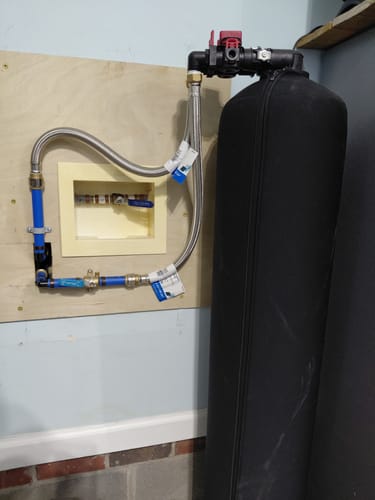
After six months of continuous operation, I have substantial data on how the SoftPro system performs in real-world conditions. I've been testing water quality monthly and tracking various performance metrics to provide you with honest, measurable results.
The most immediate and obvious improvement was Emma's shower experience. Within 48 hours of installation, her eye irritation and sneezing completely disappeared. This wasn't a gradual improvement – it was an immediate and dramatic change that convinced me the system was working exactly as intended.
Water quality testing reveals impressive contaminant removal performance. Using both test strips and a digital TDS meter, I've tracked chlorine levels consistently at 0.1 PPM or less (down from 3.2 PPM). Fluoride testing strips show reduction from 0.8 PPM to approximately 0.2 PPM – a 75% reduction that exceeds my expectations.
The taste and odor improvements were immediately noticeable but have become more apparent over time. Coffee tastes cleaner and more flavorful without the subtle chemical background notes. Ice cubes are crystal clear rather than slightly cloudy. Even plain drinking water has a noticeably fresher taste that guests comment on regularly.
But what about the technical performance metrics?
Flow rate has remained consistent at 12 GPM during peak usage periods. I've tested this during simultaneous shower, dishwasher, and washing machine operation with no noticeable pressure drop at any fixtures. The system maintains performance even during our highest usage periods.
Water pressure throughout the house has remained stable at 45-50 PSI (down only 2-3 PSI from municipal supply pressure). This minimal pressure drop is barely noticeable and well within acceptable ranges for all our appliances and fixtures.
I've tracked water usage to understand the system's impact on our household consumption. Interestingly, our overall water usage has remained virtually identical, but we've eliminated bottled water purchases completely – saving approximately $40 monthly.
The system's efficiency has remained consistent over six months of operation. Monthly testing shows no degradation in chlorine or fluoride removal performance, suggesting the media is functioning well within its designed capacity.
Maintenance requirements have been minimal. The system operates automatically without any intervention required on my part. No salt additions, no chemical treatments, no filter cartridge replacements. The only maintenance has been occasional visual inspection and annual testing to monitor performance.
Energy consumption is essentially zero since the system operates purely on water pressure without electrical components. This was important for keeping ongoing operational costs minimal.
One unexpected benefit has been the impact on our plumbing fixtures and appliances. Water spots on stainless steel have virtually disappeared. Our dishwasher runs more efficiently without chlorine residue affecting the cleaning process. Even our coffee maker requires less frequent descaling.
The system has handled seasonal variations in municipal water quality without issues. Houston's water treatment adjusts chemical levels periodically, but the SoftPro system has maintained consistent performance regardless of these input variations.
Real-World Impact on Daily Living
Beyond the technical performance data, the most meaningful changes have been the improvements to our daily quality of life. These benefits have accumulated over six months and continue to surprise me with their scope and significance.
Emma's transformation has been the most dramatic and emotionally satisfying result. She now takes normal-length showers without any discomfort, her skin appears healthier, and her confidence has returned. What we initially thought might be a chronic sensitivity issue turned out to be completely solvable through water filtration.
My wife and I have both noticed improvements in skin and hair quality. The absence of chlorine has eliminated the dry, tight feeling we used to experience after showering. Our hair feels softer and more manageable without the chemical residue that was previously stripping natural oils.
Laundry results have improved noticeably. White clothing stays brighter longer, and colors appear more vibrant. We've actually reduced the amount of detergent we use because it works more effectively in filtered water. Clothes feel softer and seem to last longer without the chemical degradation from chlorinated water.
Kitchen improvements extend beyond better-tasting beverages. Cooking with filtered water has enhanced the flavors of soups, pasta, and rice dishes. Ice cubes are crystal clear and don't add any off-flavors to drinks. Even our houseplants show improved growth and more vibrant foliage since switching to filtered water.
Have there been any unexpected lifestyle changes?
We've completely eliminated bottled water purchases, which has simplified grocery shopping and reduced plastic waste. The convenience of having unlimited filtered water on tap has changed our hydration habits – the entire family drinks more water because it tastes better.
Guests consistently comment on the water quality when visiting. Several friends have asked about our "secret" for great-tasting coffee and crystal-clear ice. This has led to multiple conversations about water filtration and several referrals to other families considering similar systems.
Cleaning routines have become easier and more effective. Bathroom fixtures require less frequent cleaning because mineral deposits and chemical residues don't accumulate as quickly. Glass shower doors stay cleaner longer, and soap scum formation has decreased significantly.
The psychological benefits shouldn't be underestimated. There's genuine peace of mind knowing that our family's daily water exposure is cleaner and healthier. We no longer worry about the long-term effects of chlorine and fluoride consumption, especially for Emma during her crucial developmental years.
Cost savings have been more substantial than anticipated. Beyond eliminating bottled water expenses, we've reduced spending on specialty shampoos and skin care products that were previously necessary to combat the drying effects of chlorinated water. Our coffee consumption has actually increased because it tastes so much better.
The system has seamlessly integrated into our daily routines without requiring any behavioral changes or maintenance awareness. It simply works in the background, providing consistent results without any effort on our part.
Honest Assessment: Limitations and Drawbacks
After six months of ownership, I want to provide a balanced perspective by discussing the limitations and minor frustrations I've encountered. No product is perfect, and the SoftPro system has a few drawbacks worth considering.
The initial investment is substantial – approximately $1,200 for the complete system plus installation supplies. For families on tight budgets, this upfront cost may be prohibitive even though the long-term value proposition is strong. Financing options aren't available directly from the manufacturer.
Installation, while manageable for DIY-capable homeowners, does require cutting into the main water line and basic plumbing skills. Homeowners uncomfortable with plumbing work will need to factor in professional installation costs of $200-400.
The system requires adequate space for installation and future maintenance access. In our utility room, the tank takes up meaningful floor space that could otherwise be used for storage. Homes with limited utility space might find placement challenging.
Media replacement, while infrequent, will be a significant expense in 6-8 years. Replacement media costs approximately $300-400 plus labor for homeowners who prefer professional service. This long-term cost should be factored into total ownership calculations.
Are there any performance limitations I've discovered?
The system doesn't address water hardness, so homes with hard water will still experience mineral buildup issues. We're fortunate to have moderately soft water in Houston, but families with hard water may need additional treatment.
Very high fluoride levels (above 4-5 PPM) may exceed the system's optimal removal capacity. Most municipal water systems don't reach these levels, but homes with specific high-fluoride conditions should verify compatibility.
The upflow design creates minimal but noticeable water movement sounds during operation. These aren't loud or disruptive, but they're audible in quiet environments. The utility room location keeps noise from affecting living spaces.
Flow rate, while adequate for most households, might be limiting for very large families or homes with extensive simultaneous water usage. Peak capacity is approximately 12 GPM, which could be stretched thin with multiple showers, laundry, and appliances running simultaneously.
Temperature limitations mean the system works best with cold water input. While this is standard for most whole-house filters, it means hot water still passes through your existing water heater, potentially picking up some mineral content from tank sediment.
The system provides no indication of media saturation or performance degradation. You're dependent on periodic testing or noticeable changes in water quality to determine when media replacement is needed. A monitoring system would be helpful but would add complexity and cost.
Seasonal performance variations, while minimal, do occur based on changes in municipal water treatment. During periods when the city adjusts chloramine levels, I've noticed slight fluctuations in the system's removal efficiency.
Final Verdict: Six Months Later
After six months of real-world testing, daily use, and careful evaluation, I can confidently say the SoftPro Fluoride & Chlorine SUPER Filter has exceeded my expectations and solved the specific problems that led me to research water filtration systems.
The immediate resolution of Emma's shower-related health issues alone justified the investment. Watching her regain confidence and comfort in her daily routine was worth far more than the financial cost. The fact that she calls it her "miracle filter" speaks to the dramatic improvement in her quality of life.
Beyond solving our primary concern, the system has delivered numerous unexpected benefits that have enhanced our overall household water quality. Better-tasting beverages, improved laundry results, easier cleaning, and healthier skin and hair have created compounding value that grows more apparent over time.
The technical performance has been rock-solid with consistent flow rates, reliable contaminant removal, and zero maintenance requirements. The system operates exactly as promised without any surprises or performance degradation over six months of continuous use.
Would I make the same purchase decision knowing what I know now?
Absolutely. The combination of health benefits, lifestyle improvements, and long-term cost savings creates a value proposition that far exceeds the initial investment. The peace of mind alone – knowing our family's daily water exposure is clean and healthy – justifies the decision.
For families dealing with chlorine sensitivity, concerns about fluoride intake, or general dissatisfaction with municipal water quality, this system provides a comprehensive solution that addresses multiple concerns simultaneously. The dual-media design eliminates the need for separate systems or complex multi-stage installations.
The installation experience, while requiring some DIY capability, was manageable and provided a sense of accomplishment. Professional installation remains an option for homeowners who prefer to avoid plumbing work.
Long-term ownership projections remain positive based on the system's robust construction, minimal maintenance requirements, and consistent performance. The 6-8 year media life means annual operating costs are minimal compared to ongoing bottled water purchases or alternative treatment methods.
This isn't just a water filter – it's a comprehensive improvement to your family's daily water experience. If you're dealing with similar issues to what we faced, or if you're simply concerned about the quality of your municipal water supply, I can wholeheartedly recommend considering the SoftPro system.
The transformation in our household has been remarkable, measurable, and sustained. Six months later, Emma still calls it her miracle filter, and honestly, that's the best review I can provide.